
About the Presidential Libraries
A Presidential Library is a facility to house the archival records of a presidency of the United States. These repositories preserve and provide public access to these historical materials.
In the 1930s, a dramatic increase in the volume of Presidential papers led President Franklin D. Roosevelt to seek the advice of historians and others on how and where to keep his White House files, earlier papers, his book collection and key memorabilia. At that time, all of the White House papers of a President of the United States were deemed to be the President’s personal property.
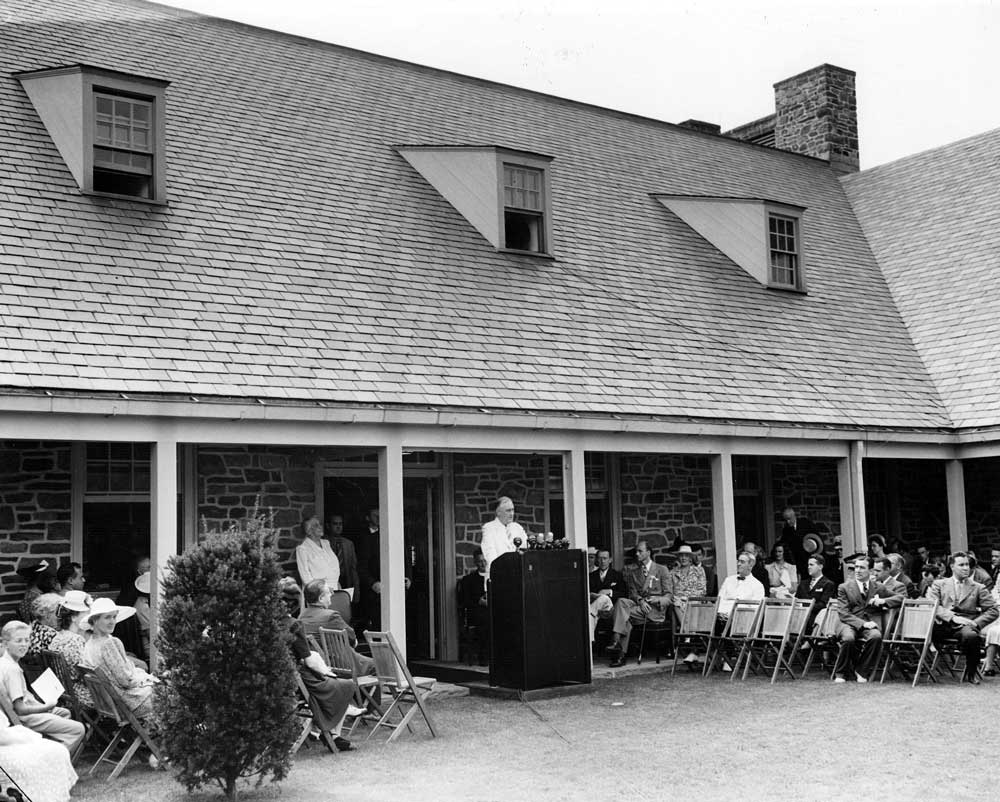
Roosevelt announced plans for a new type of facility to house these papers and materials on December 10, 1938. An organization was chartered to raise private funds for the construction of the building on Roosevelt’s Hyde Park, New York estate.
On July 18, 1939 Congress passed a joint resolution accepting the new facility and agreeing to operate it as part of the National Archives and Records Administration. The Roosevelt Library was dedicated on June 30, 1941.
The Roosevelt Library became a model for many subsequent Presidential Libraries.
Over time, the term “Presidential Library” has come to describe entire facilities, museums and campuses dedicated to the history and legacy of a president. The National Archives’ role at each of these sites varies. Today most Presidential Archival Depositories are co-located with broader campuses that include museums, gardens, event spaces, etc. and many Presidents and First Ladies have chosen these sites as their final resting places.
Learn more about the Presidential Libraries.
Learn more about the National Archives.
About the National Archives Foundation
The National Archives Foundation is the independent nonprofit partner to the National Archives, helping to inspire a deeper appreciation of our country’s heritage and encourage citizen engagement in our democracy. The Foundation generates financial and creative support for National Archives exhibitions, public programs, and educational initiatives, introducing America’s records to people around the U.S. and the world.
Within the National Archives Building in Washington, DC, as well as its many regional archives, records centers, and Presidential libraries and museums, and in outreach to the American public through traveling exhibitions and national media, the Foundation’s goal is to further the mission of the National Archives to protect, preserve, and promote our nation’s story through its records.
It is the vision of the National Archives Foundation that this creative effort, enhanced with 21st Century methods, will produce a greater understanding of the American journey – where our nation has been and how it can be best guided in the future. In this public/private partnership, the role of the Foundation is to generate financial and creative support from individuals and corporations to provide this extensive outreach, which has not been mandated by Congress.